As per my previous post, this week was a mash of self-reflection and self-questioning. Am I right in thinking this way? Am I right in wanting to portray myself in this manner? Should I always be careful when buying products on sale or from the advert? Should I second guess everything I do or write?
It’s incredibly hard to know where to start with this week’s work as it’s all so interconnected. I came across a book a few years ago about “training your inner chimp” which I never agreed with and no matter how many times I read and re-read chapters I just didn’t believe that we as humans should be delving so deeply into our minds and why we are who we are. Yes, change is good and accepting who you are is a massive step in connecting with “the self” but surely changing the inner workings of your brain because you can’t accept that part of you is just as dangerous as booking in at the nearest plastic surgery clinic. Surely you being you and being able to portray that effectively is the key to happiness, not adapting/moulding/changing your own behaviour to “fit in with what society says you should be”.
BUT – self-reflection is a must in this course so here goes!
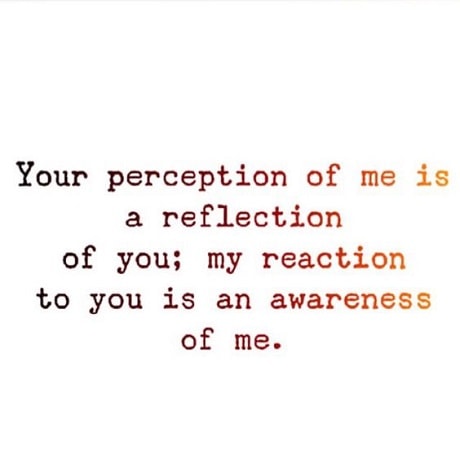
The first main area of the collective resources I need to acknowledge is the age old “Nature or Nurture” debate. The sheer amount of research around this issue is more than one can ever read and absorb. On a personal level, I know I follow certain patterns and paths because of how I was brought up. Had I not experienced certain areas of my life I wouldn’t be who I am or where I am right now. On a nature level, I look like my mum – same hair colour, face shape, body shape. On a nurture level I am independent, I was given the encouragement to go travelling by myself at 18, I was encouraged to cook for myself and earn money for myself. In relation to creativity, I see it as a perfect amalgamation of both sides – biologically I have creativity, I can see something perfectly placed in time to capture, I can visualise a piece of work before I produce it. BUT I learnt to use Adobe software, I learnt how to use a pencil and paintbrush – these were just the necessary mediums to portray my creativity.
Dan Gilbert was spot on in his TedTalk “The Psychology of Your Future Self” – here he talked about how we as humans change and adapt over time. I believe we are ever changing, both physically and mentally and that’s not a bad thing. We change depending on where we are in the world (nurture), our bodies change as we get older (nature). Who we are today is not who we will be in 10 years – look at yourself 10 years ago, are you the same?! He asked the question “why focus so hard on who we are right now” – why not just take a step back, acknowledge who we are right now and accept that is changing as we speak.
The person you are right now is as transient, as fleeting, as temporary as all the people you’ve ever been
Dan Gilbert – https://www.ted.com/talks/dan_gilbert_the_psychology_of_your_future_self
Because of this, does that mean that the work we produce now will be different to the work we produce in 10 years – Oh God I hope so!!!!!
Martin Hosken took this one step further to take our inner psychology and talk about how advertising companies use this to encourage or “nudge” us to do something. We still have a sense of choice but have had a gentle, subconscious push into the right direction.
Netflix produce a show called “Explained” – one episode of which was about Diamonds. Not just how they are mined and displayed in rings but how the diamond market took off through probably the most successful advertising campaign ever. The slogan “Diamonds are Forever” was introduced by DeBeers to promote Diamonds as a suitable engagement jewel in 1948. This slogan remains and from that date, Diamonds have been the most popular jewel for engagement rings. Not only did DeBeers manipulate supply but also demand. And not just demand, they also encouraged people to keep their diamonds forever, meaning they weren’t as readily resold and therefore the “diamond” itself cheapened. To this day they have kept this slogan and this one small subconscious “nudge” has had a resounding effect across this market.
Nowadays, with the ever expanding digital market, do these advertising campaigns have the same effect? Because they are there one day and gone the next will we ever have such a resounding campaign? If we see a hundred adverts in one day flashing on the bottom of our phone screens or popping up in the middle of Youtube videos, does that mean we pay less attention to them now? Do the recent Christmas adverts use our human emotional response to encourage us to shop there? The fact the John Lewis dragon had sold out immediately suggests this is the case!
So this new Land Rover campaign shows the car rolling, splashing through deep water in a Top Gear style push on the car’s limitations. Immediately linking the car to James Bond, the advert invites the consumer to try the car out – to be their own James Bond, to feel the sense of excitement within a safe space. The humour and use of voiceover is just spot on. Anyone who watches this will smile and it will have a long lasting effect in the advertising world.
The advert feels authentic and not manipulated with the car driving away with damage – showing the fact the car isn’t indestructible but human like the rest of us (just with an added sense of danger). As Hoskens states,t eh world is craving authenticity – in a world where digital media and advertising has taken over, we crave, need, desire a feeling of authenticity within our adverts. Perhaps this is why I connected so strongly with how Pearlfisher use their designing to bring back the authenticity in a world where it’s so easy to get lost in a homogenised society.
So, therefore, why do we feel the need to change or reflect on ourselves if we don’t fit in with what society expects of us? I read Giddens’ chapter getting more and more frustrated at his promotion of constant self reflection bordering on dangerous narcissism. Should we write a journal every single day reflecting on how we were that day? Surely the hour spent every night “self reflecting” is just a waste of life? Tomorrow is a new day and as long as you learn from the mistakes you’ve made in the past you’ll continue to learn from future mistakes you’ve made. There is no such thing as a perfect person, and believing that writing a journal or constant self reflection will magically turn you in to a perfect “non-mistake-making” human is just dangerous. Talking to your past self about what you did wrong just promotes negativity and has a strong potential for promoting depression or anxiety. surely moving swiftly on wards and accepting/learning from the mistakes you’ve made avoids you getting stuck in the past and living in the here and now. The sheer sense of self importance within this digital world is something we all crave to get away from.
On the ideas wall this week, Tanya asked about our use of social media. So far, 6 out of 10 of us have responded saying we barely use it at all. I deleted my Facebook account following a bad break up and haven’t looked back. I even turned down a job which asked me to be an active and participating member of Facebook. I am hoping the use of Social Media has now peaked and we are starting the slow decline back towards connecting on a personal level. Digitalisation is huge and is so necessary in this globalised world but at the end of the day, personally, I want to be face to face, I want to hug my friends or hold someones hand. No amount of VR or AR will replace human to human contact.
References:
Giddens, A., (1991) The Trajectory of the Self . Cambridge: Polity Press.
Gilbert, D., 2020. The Psychology Of Your Future Self. [online] Ted.com. Available at: <https://www.ted.com/talks/dan_gilbert_the_psychology_of_your_future_self> [Accessed 3 April 2020].
 Hannah Elizabeth Design